By Dr. Bobby Virk, DMD, MSD
Do Invisalign attachments damage teeth? Usually, no. When attachments are bonded, maintained, and removed carefully, they are designed to work with your enamel rather than harm it. However, removing the composite at the end of treatment can create small surface changes if the cleanup technique is not carefully controlled.
At Smiles Orthodontics, we use attachments when they help us achieve movements that the aligner alone may not control as predictably. If you are considering Invisalign, understanding why these small tooth-colored shapes are used can make the treatment process much less mysterious.
What Are Invisalign Attachments?
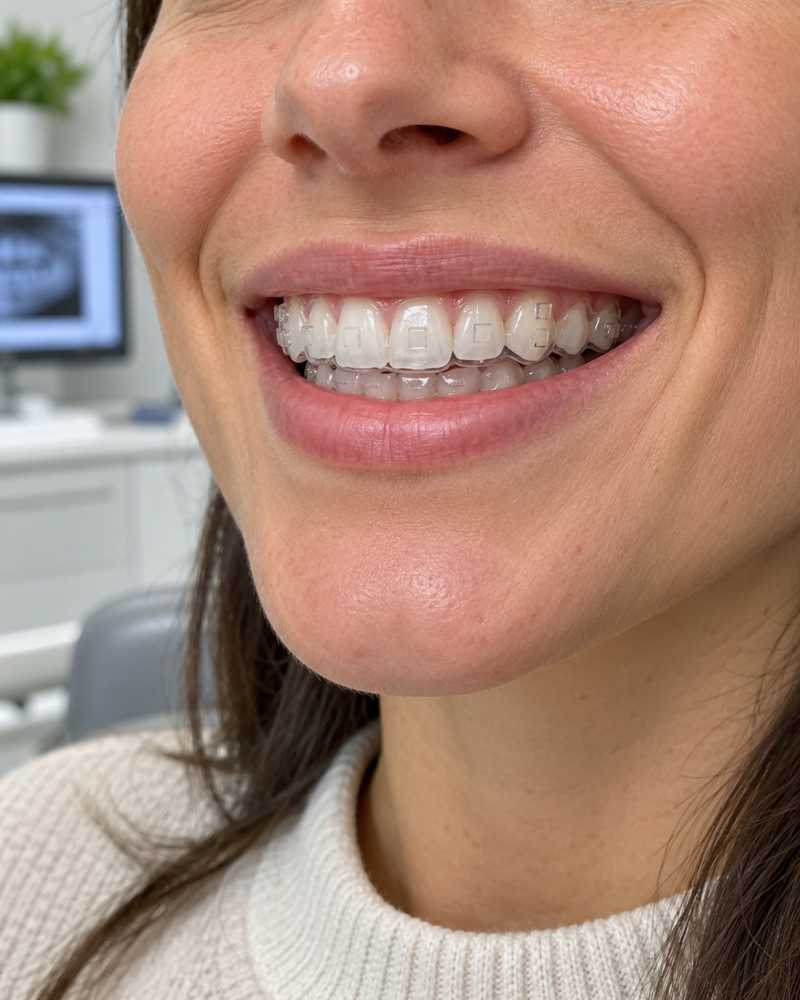
Invisalign attachments are small pieces of tooth-colored composite material bonded to selected teeth.
They are not brackets, and they do not connect with wires. Instead, they give the clear aligner an extra surface to grip or push against when a tooth needs a more specific movement.
Attachments may help us with movements such as:
- Rotating a tooth
- Moving a tooth vertically
- Improving root control
- Creating better aligner retention
- Guiding more complex movements
Not every patient needs attachments on every tooth. Their number, shape, size, and position depend on the treatment plan.
Our step-by-step Invisalign treatment guide explains how digital planning, aligner wear, progress visits, and refinements fit together throughout treatment.
Can Invisalign Attachments Damage Enamel?
The Main Concern Is Usually Removal, Not Wearing the Attachment
The attachment itself is made from composite resin, a material commonly used in dentistry, and is bonded to the outside surface of the tooth.
During treatment, the more practical concern is keeping the area around the attachment clean. Plaque can collect along its edges if brushing becomes inconsistent, just as it can around other dental or orthodontic materials.
At the end of treatment, the attachment must be removed and the remaining bonding material polished away. That is the stage where technique matters most.
A recent systematic review indexed in PubMed found that attachment removal can produce measurable enamel surface changes and leave residual composite depending on the instruments and cleanup method used. However, the available evidence was limited largely to laboratory studies, so the findings should not be interpreted as proof that routine Invisalign treatment causes clinically significant tooth damage.
The practical takeaway is simpler: careful attachment removal and polishing matter.
How Are Invisalign Attachments Put On?
Bonding Is Usually Quick and Conservative
Placing attachments does not normally require drilling away healthy tooth structure.
The process generally involves:
- Cleaning and preparing the tooth surface.
- Applying the bonding material.
- Using a template that positions the composite accurately.
- Curing the material so the attachment hardens.
- Checking the shape and fit of your aligner.
Once the aligner is seated, the attachment fits into a corresponding space in the tray.
You may notice that removing and reinserting your aligners feels slightly tighter after attachments are added. That extra grip is often part of their purpose.
Do Attachments Make Invisalign More Uncomfortable?
They can make the aligners feel tighter, particularly when treatment begins or when a new set of trays starts moving a tooth more actively.
You may also notice the attachments with your tongue when your aligners are out. They can feel slightly raised or rough at first, but most patients adapt quickly.
For practical tips on getting through the adjustment period, our guide to living comfortably with Invisalign covers aligner care, soreness, storage, and everyday habits.
Can Cavities Form Around Invisalign Attachments?
Attachments Do Not Cause Cavities, but Cleaning Still Matters
The composite itself does not create tooth decay.
The issue is plaque.
Attachments add contours to the tooth surface, so brushing carefully around them is important. Food and plaque left against enamel for long periods can contribute to decay or areas of demineralization.
To protect your teeth:
- Brush after meals when practical
- Floss every day
- Keep your aligners clean
- Avoid putting trays back over food debris
- Remove aligners for food and drinks other than water
- Continue regular dental checkups and cleanings
Our piece on caring for your smile between orthodontic visits has additional tips for protecting your teeth throughout treatment.
What Happens When Attachments Are Removed?
We Remove the Composite and Smooth the Tooth Surface
Once an attachment is no longer needed, the composite is carefully removed from the enamel.
The goal is to distinguish the bonding material from the natural tooth, remove the residual composite, and polish the surface without unnecessarily altering the enamel.
You may feel vibration or pressure during this process, but the attachment is not being pulled off in a way that should tear away a piece of healthy tooth.
After polishing, the tooth should feel smooth again.
If you think you can still feel a rough area after attachment removal, mention it. Residual bonding material can sometimes feel different from the surrounding enamel and can be checked.
Can an Invisalign Attachment Fall Off?
Yes. An attachment can occasionally chip or detach during treatment.
That does not usually mean your tooth has broken.
If you notice that an attachment is missing, contact us rather than waiting until your next appointment. Whether it needs to be replaced immediately depends on which tooth is involved and what movement that attachment was helping us achieve.
Do not attempt to glue it back on yourself.
Why Do Some People Need Many Attachments and Others Need Only a Few?
Your treatment plan determines the attachments, not the Invisalign brand alone.
One patient may need only a few simple alignment movements, while another may require rotations, bite correction, root control, or more challenging movements.
That is why two people wearing clear aligners can have very different-looking setups.
If visible attachments are a concern, tell us during your consultation. We can explain where they are likely to be needed and what role each one plays before treatment begins.
Patients deciding between aligners and fixed appliances may also find our Invisalign vs. braces guide helpful.
What If I Already Have a Weak or Damaged Enamel?
Tell us before treatment.
Previous enamel damage, large restorations, crowns, bonding, or other dental work can affect how attachments are placed and removed. We evaluate the surfaces that may need attachments and adapt the treatment plan when necessary.
Your general dentist also remains important during Invisalign treatment. Orthodontic visits monitor tooth movement, but routine dental examinations help identify decay, gum problems, or other oral-health concerns.
Invisalign Near Auburn and Puyallup
Patients exploring Invisalign near Auburn can visit our Puyallup location for clear-aligner evaluation and treatment. You can also review our orthodontic care near Auburn to learn more about the treatment options available nearby.
For patients considering Invisalign in Puyallup, our office is located at 210 4th Ave SW Puyallup, WA 98371
New Patients: (253) 655-0855
Current Patients: (253) 848-4537
You can also explore our Invisalign in Puyallup treatment page for more information about clear aligners, candidacy, treatment planning, and payment options.
Frequently Asked Questions About Invisalign Attachments
Do Invisalign attachments permanently damage teeth?
They are not intended to permanently damage teeth. The attachment material is bonded to the enamel and later removed. Careful removal and polishing are important because research shows that cleanup techniques can influence enamel surface changes.
Does getting Invisalign attachments hurt?
Placing attachments is generally not painful. You may notice extra pressure when your aligners are inserted because the attachments help the trays grip the teeth more effectively.
Are Invisalign attachments drilled into the teeth?
No. Attachments are bonded onto the outer tooth surface using composite material. They do not function like screws or implants and are not drilled into the enamel.
Can attachments stain?
The composite can occasionally pick up discoloration over time, particularly with frequent exposure to strongly colored foods, drinks, or tobacco. Good oral hygiene can help keep both teeth and attachments cleaner.
What should I do if an attachment falls off?
Contact our office. We will determine whether the attachment needs to be replaced based on the tooth movement planned for that stage of treatment.
Will my teeth feel normal after attachments are removed?
They should feel smooth once the composite has been removed and the surface has been polished. If you notice persistent roughness, let us know so we can check for remaining bonding material.
Attachments Are Small, but Their Job Can Be Important
Attachments can look like an extra complication when you first hear about them, but they are often what gives clear aligners the control needed to move a tooth more precisely.
The important part is not avoiding attachments at all costs. It is using them only where they add value, keeping your teeth clean throughout treatment, and removing them carefully when their job is finished.
If you want to know whether your Invisalign plan is likely to require attachments, you can request a free orthodontic consultation and we’ll evaluate your teeth, bite, and the movements needed before explaining what your treatment could involve.